ZILAB ZILAB Co., Ltd.

ZAFS Series

Flatness · Resistivity · P/N · Wafer ID · Sorting

All three models use the same measurement principle. What differs is wafer size, port configuration and whether sorting is included. The ZAFS 4000 adds an eight-port sorter, finishing measurement and sorting in one tool.

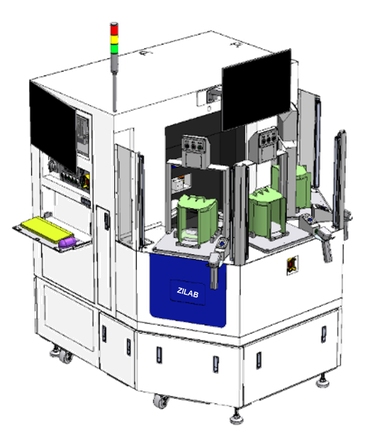
A ZAFS 4000 in a cleanroom — eight cassette ports across the front, a safety light curtain and ready/running/done lamps at each port, operator monitor above
ZAFS 4000 WAFER SORTER

Line-up

Model comparison

ItemZAFS 4000ZAFS 3000ZAFS 2000
Wafer300 mm (12″)
convertible to 200 mm (8″)
300 mm (12″)200 mm (8″)
FunctionMeasurement + sortingMeasurementMeasurement
Ports8 (2 in / 6 out)33
GeometryThickness · TTV (GBIR) · Bow · Warp · GFLR
ElectricalResistivity · P/N type
IdentificationFront and back OCR, 2 units (standard)OCR (option)OCR (option)
DiameterSupported
Throughput55 sec / waferdepends on configuration
Monthly capacity5 units10 units10 units

ZAFS 3000 / 2000

Three-port, measurement only

The measurement unit and the measurement principle are the same as the ZAFS 4000. Without the sorter and with three ports instead of eight, the footprint is smaller. The ZAFS 3000 is 12″ (300 mm) only; the ZAFS 2000 is 8″ (200 mm) only.

  • Thickness · TTV (GBIR) · Bow · Warp · GFLR
  • Resistivity · P/N type · diameter
  • OCR is optional
ZAFS 3000 exterior drawing — ZILAB front panel, operator station and monitor on the left, signal tower on top, three cassette stages across the front, each with a safety light curtain
ZAFS 3000 — three-port measurement tool (the ZAFS 2000 is the same structure in 8″)

ZAFS 4000 · Specification

ZAFS 4000 in detail

300 mm Wafer Flatness Measure & Sorting System

Measurement — flatness
ParametersThickness, TTV (GBIR), Bow, Warp, GFLR
MethodElectrostatic capacity, facing upper / lower probe pair
R direction2 mm pitch
θ directionSelectable, 3 lines or more (set in the recipe)
Default 4 line — 0 / 45 / 90 / 135° in the wafer frame
FQA294 mm or under
Thickness range600 – 900 µm
TTV range< 300 µm
Warp range< 800 µm
Bow range< 800 µm
GFLR range< 800 µm
Resolution0.5 µm
Repeatability — thickness± 0.05 µm measured σ 0.002 – 0.003 µm
Repeatability — Warp / Bow± 0.5 µm
Measurement — resistivity · P/N · diameter
Resistivity range1 – 1,000 Ω·cm
Resistivity resolution 100 – 999 Ω·cm → 2 significant digits
10 – 99 Ω·cm → 3 significant digits
1 – 9 Ω·cm → 4 significant digits
Resistivity pointsUp to 3 per wafer (set in the recipe)
P/N typeP or N for wafers of 1 – 1,000 Ω·cm
Some coated wafers may not be probeable.
Diameter range298 – 302 mm
Diameter resolution100 µm
OCRFront and back, 2 units (within IS1741-11 performance)
Hardware
WaferSilicon wafer 300 mm ± 0.2 mm, thickness 0.6 – 0.9 mm
Convertible to 200 mm (8″) — by agreement
Cassette stage25 slot · cassette monitoring sensor · cassette barcode reading
2 input stages / 6 output stages
Transfer robotClean robot, single arm, backside adsorption
Ceramic hand · vacuum chuck
Measurement stagePEEK, Teflon (rotary stage part)
AlignerCCD sensor type · vacuum chuck · moves while adsorbing the wafer
Scan stageLinear motor (two motors)
Measurement unitCapacitance sensor + amplifier
Outside dimensions3,250 (W) × 1,900 (D) × 2,400 (H) mm
Indication lamp and LCD not included / cassette stage height approx. 900 mm
Main unit materialOuter case steel plate (baking finish) · SUS, Al (alumite)
Paint colour white ivory
Control unitPC · UPS
MassApprox. 1,500 kg
Utilities
ItemSpecification
Power (GPS)220 V, 30 A, 1 phase, 60 Hz, 4 kW
CDA8π hose ×1, 600 kPa, 100 LPM
Vacuum8π hose ×1, −60 kPa, 50 LPM
InterfaceRJ45, 100 Mbps or above, ×1 (external communication)
EnvironmentCleanroom class
Work area700 mm front · 700 mm rear · 600 mm side clearance
Port configuration
Input2 ports
Output6 ports — Grade 1 ×2 / Grade 2 ×2 / Reject ×2
Sorting criteriaThickness, TTV, Bow, Warp, GFLR, resistivity, P/N, diameter, OCR ID
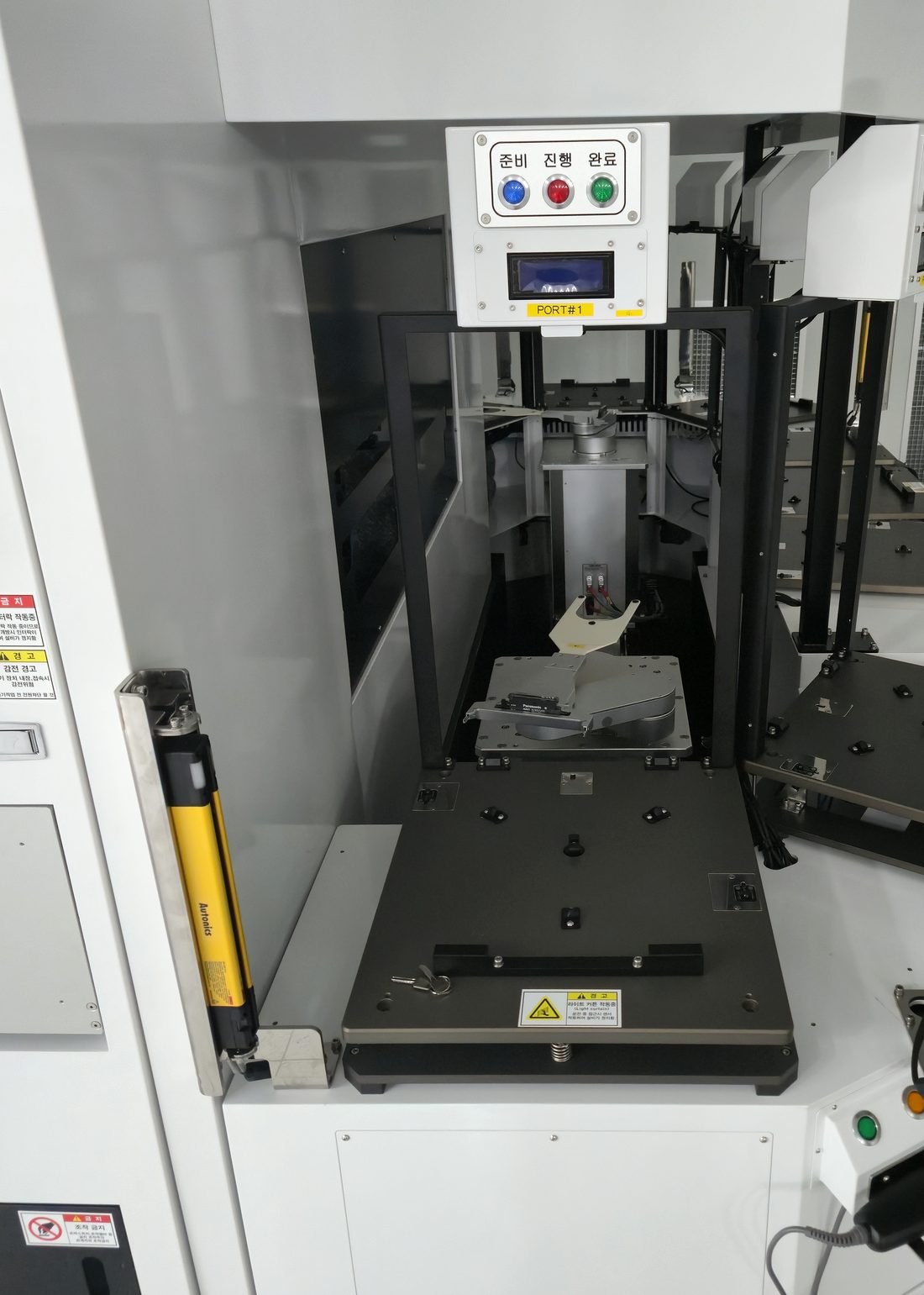
Port 1 of the ZAFS 4000 — ready/running/done lamps with the port number, cassette stage, safety light curtain on the left, transfer robot further in
Input port — status lamps · cassette stage · safety light curtain

Beyond the spec sheet

The things that decide it on the floor

Each item below answers a complaint that came up repeatedly from floors running earlier-generation tools.

Safety

Area sensors on every port

A light curtain on every port. If an operator reaches for a cassette while the tool is running, it is detected immediately, preventing misalignment and breakage. Less space than a door, and no fatigue from opening and closing one.

Stability

Vibration isolator with granite

Separates the measurement system from external vibration sources. Combined with a granite base, it closes the path by which floor vibration leaks into a micrometre-scale reading.

Cleanliness

Top cover optional

Blocks dust ingress and minimises outside influence while the tool runs. An open type, with the cassette section exposed as on earlier tools, is also available.

Throughput

Cassette mapping system

Right after loading, the mapping sensor on the robot reads wafer presence slot by slot in one pass. Empty slots are skipped, removing the loss of reaching into each slot in turn.

Operation

Real-time cassette monitoring

CASSETTE, PROCESSING and START indicators on every port let the operator read progress from in front of the tool, and prevent a cassette being lifted off while it is still being processed.

Operation

Dual monitor · protruding wafer detection

A second monitor at the cassette section, in addition to the front one, lets the status be checked from either side of the tool. A wafer protruding from a cassette is also detected.
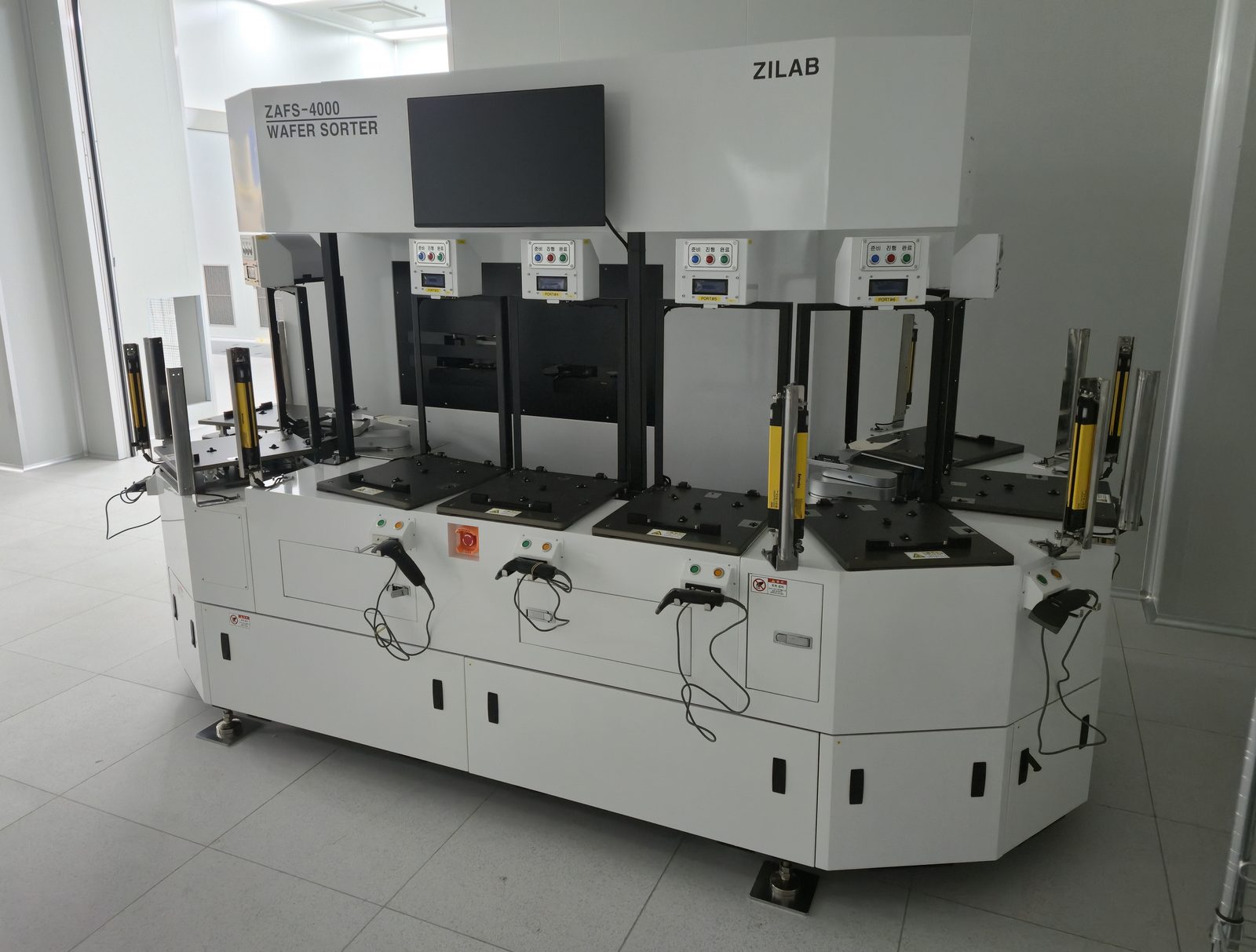
The real tool — cassette stages, the light curtain on every port (yellow posts), per-port indicators and START button (18 s, no sound)

Control software

Operating screens

Four screens — Measure, Set Recipe, Open Data and Maintenance — cover operation, recipe setting, result review and tool checks.

The Measure screen while running — status reads WORKING and a wafer marker moves across the tool layout through robot, aligner and scan stage
Measure — while running (10 s, looping). The marker on the layout shows exactly where each wafer is right now
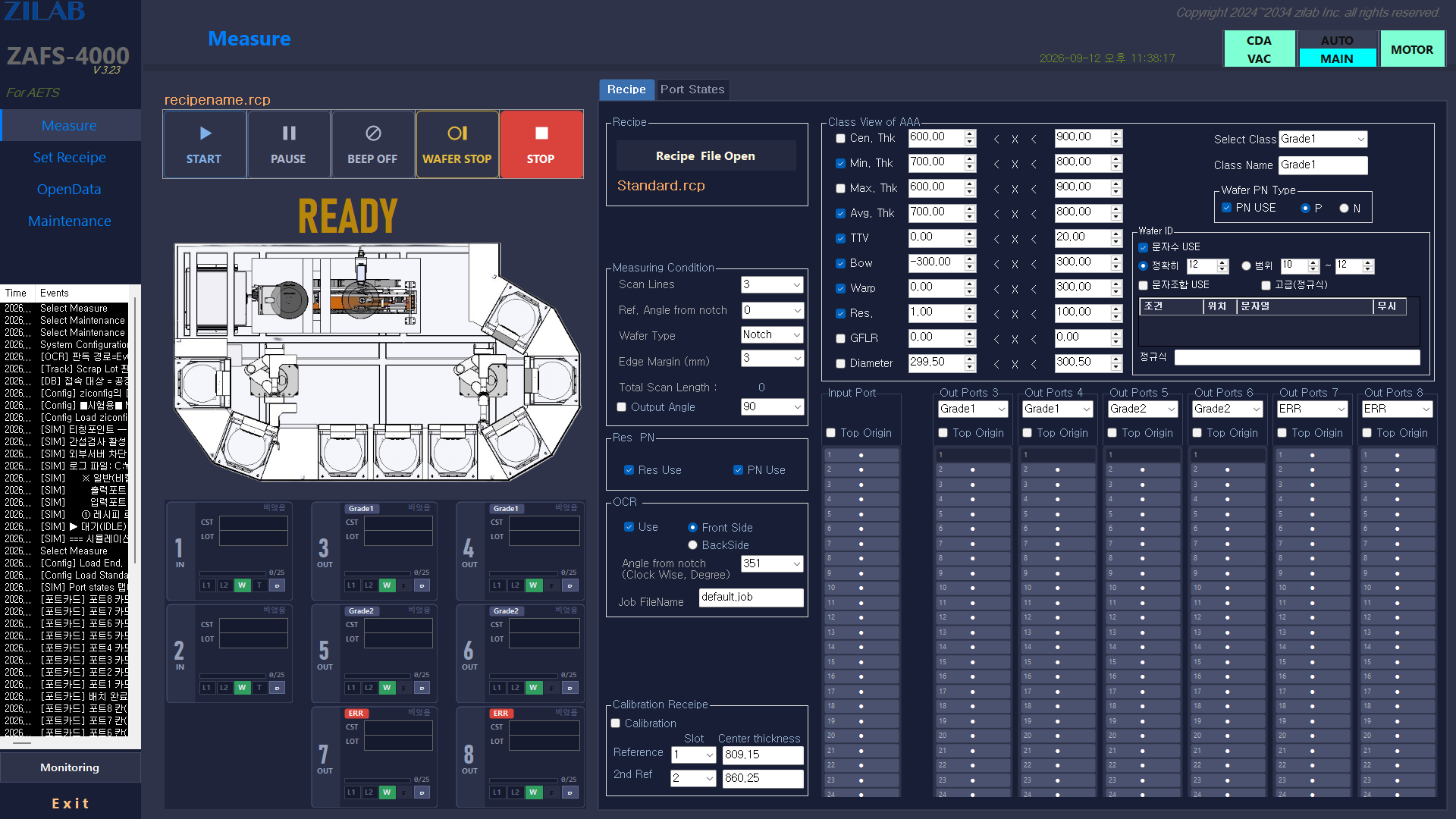
Full Measure screen — tool layout and port status with recipe and grade conditions
Measure — start and stop, with port status
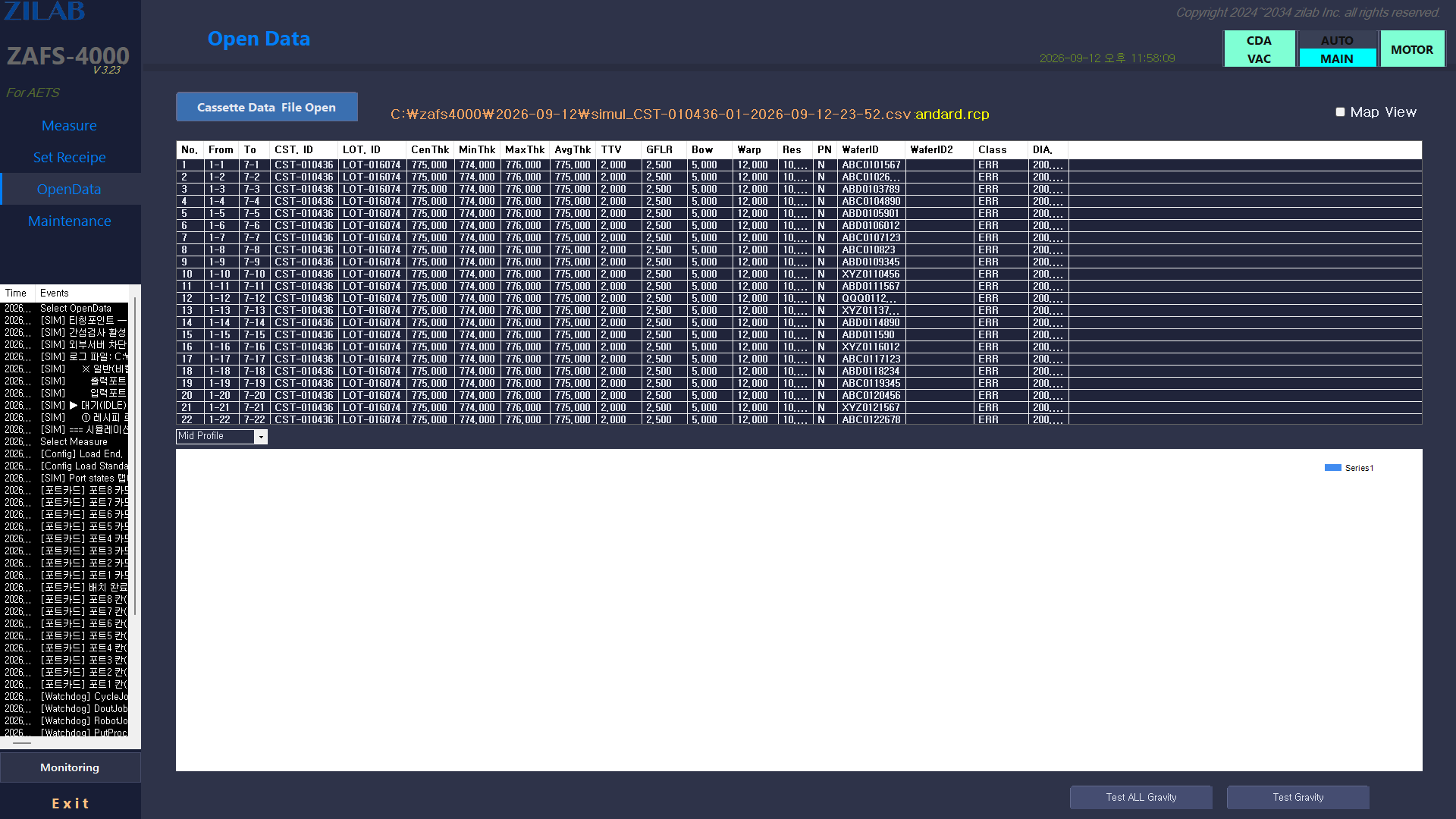
Open Data screen — list of stored measurement results and per-wafer detail
Open Data — review stored measurement data